
Reimagining Tink!SV (Learning Space)
Discover how South View Primary School redesigned its makerspace to spark creativity and build 21st Century skills through student-led making, design thinking, and peer mentorship
ABOUT THE PROJECT
South View Primary School reimagined its makerspace — Tink!SV (!magine, !nnovate, !nspire) — anchored in a clear vision: that every corner of the school should inspire curiosity, invite exploration, and empower students to create and contribute. The redesign set out to optimise space utilisation, create innovative learning opportunities, and develop 21st Century Competencies (21CC) through meaningful, hands-on engagement.
What makes this project distinctively student-centred is how the space itself was shaped. Student leaders known as Maker Buddies applied the FIDS design thinking process to prototype new activities and spatial redesigns, before confidently presenting their vision to the school community in the school foyer during upper primary recesses. Every idea reflected genuine creativity and ownership — giving students the voice and tools to shape their own learning environment.
The redesigned Tink!SV features purposefully designed learning zones — an Ideation and Presentation Zone equipped with writable boards and a display screen for design pitches, a Materials Zone for hands-on building and making, a Tinkering Zone and for open exploration during recess, and a Recycling Zone that embeds sustainability practices into daily maker habits. Together, these zones create a dynamic learning ecosystem where students are empowered to explore, create, contribute, and lead.
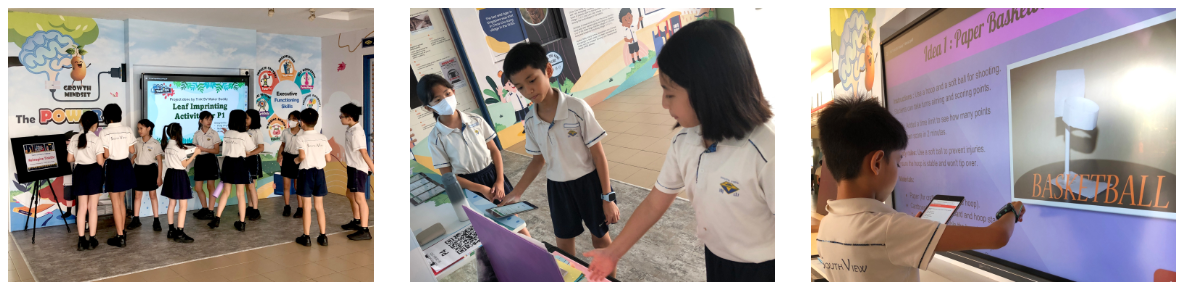
Maker Buddies @ The School Foyer:
During upper primary recesses, Maker Buddies took over the school foyer to present their bold ideas for reimagining Tink!SV. Using the FIDS design thinking process, they prototyped new activities and spatial redesigns, and confidently shared their vision with the school community — giving students the voice and tools to shape their own learning environment.
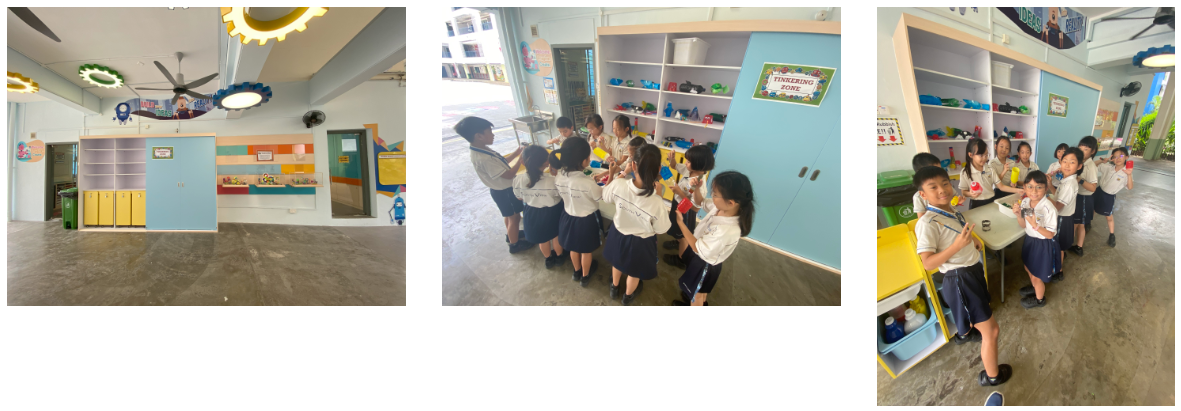
Tinkering Zone and Showcase:
Students gather at the Tinkering Zone — an activity station that brings materials directly to young makers. The zone is anchored by lockable show and stow cupboards and mobile units containing TROFAST shelves that keep resources organised and accessible, creating a purposeful space that invites hands-on exploration, creativity, and a spirit of inventive making.
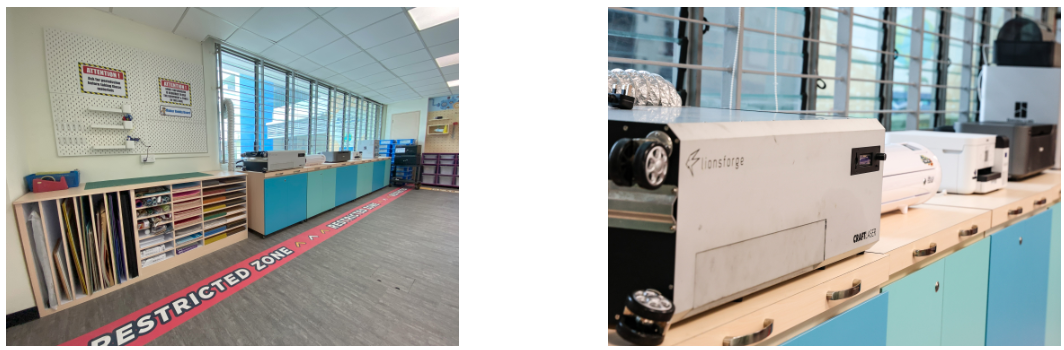
Digital Fabrication @ the Restricted Zone
A park and lock docking station houses digital fabrication equipment, allowing tools to be repositioned flexibly to suit the needs of each activity — and securely stowed away after, ensuring that the right resources are always where the learning happens.
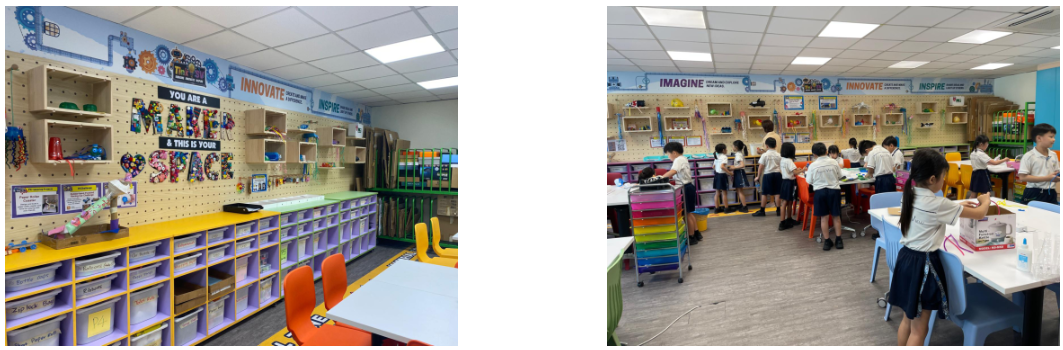
Material Access & Showcase Zone
Students access a wide range of materials to bring their maker projects to life, with clearly organised shelves that encourage responsible use and minimise wastage. The zone also celebrates student work through dedicated showcase displays, fostering a culture of pride, reflection, and creative inspiration among peers.
PROGRAMME AND SPACE DESIGN
Tink!SV serves multiple educational functions through its flexible design, supporting both digital and non-digital making across a range of structured programmes and student-led initiatives. As part of SVPS' STEM and innovation efforts, the space deepens the use of educational technology while nurturing inventive, hands-on learning aligned with the school's Future of Learning goals.
The Tink!SV InnoSparks Challenge is a makerspace-based learning programme designed to nurture creativity, innovation, and collaboration. Working in small teams, students identify real-world issues and design solutions through both hands-on and digital making, guided by the FIDS design thinking process. Students create and share prototypes with their peers, developing adaptive thinking, communication, and problem-solving skills through multiple iterations of their design.
Beyond structured programmes, the space comes alive through two regular maker experiences. Tink!SV Maker Recess invites students to take part in STEM activities and challenges during recess — developing self-directed, intrinsically motivated learners. Tink!SV Makers' Friday offers students a sign-up based programme where they work in teams to design and build products using both digital and conventional making across one to three sessions, or take part in coding challenges in a safe, creative environment.
Underpinning all of this is the Tink!SV Maker Buddy Programme, where older students with a passion for making volunteer to mentor younger students — facilitating activities, modelling making, and demonstrating leadership within the space. Through peer-to-peer learning and teamwork, Maker Buddies take genuine ownership of the makerspace, helping others while inspiring a schoolwide culture of creativity and collaboration.
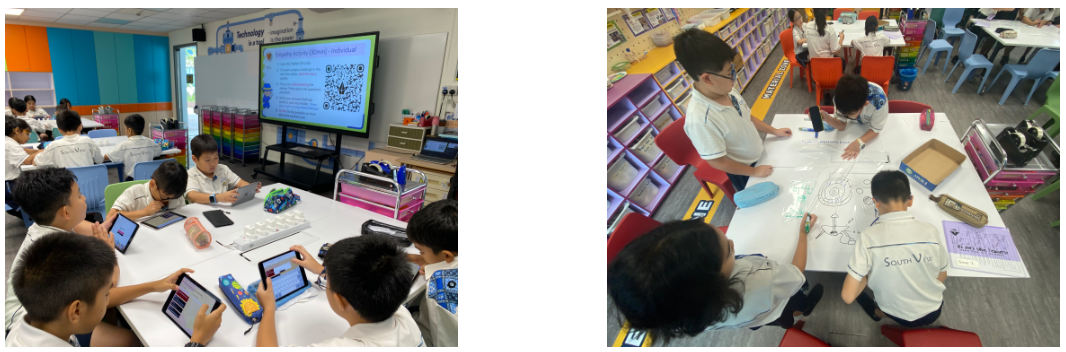
Tink!SV InnoSparks Challenge:
Students engage in the Feel and Imagine stages of the FIDS design thinking process — stepping into the shoes of real-world users and brainstorming innovative solutions. Through empathy, creative ideation, and collaborative problem-solving, students learn to design with purpose and heart.
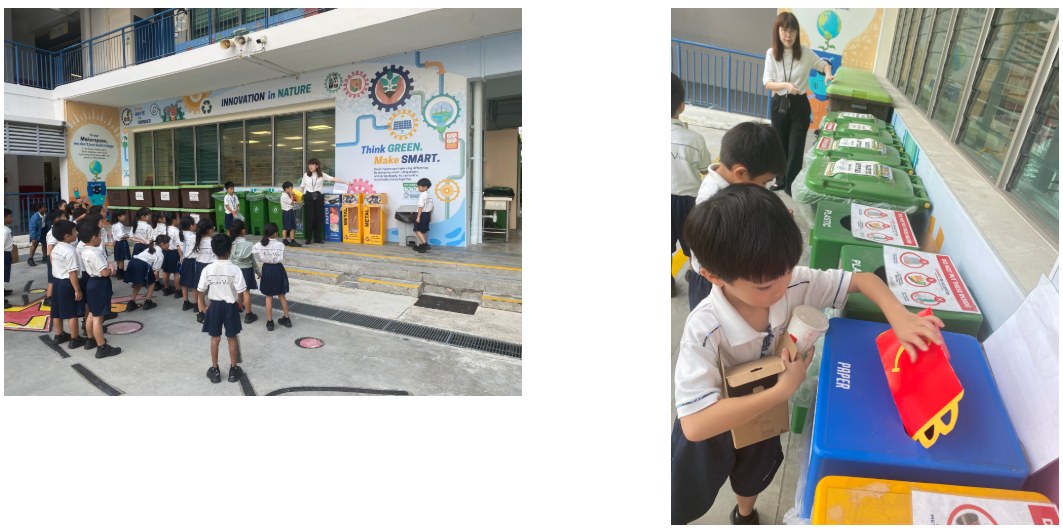
Tink!SV Makers' Friday, Tink!SV Maker Recess and Tink!SV Maker Buddy Programme
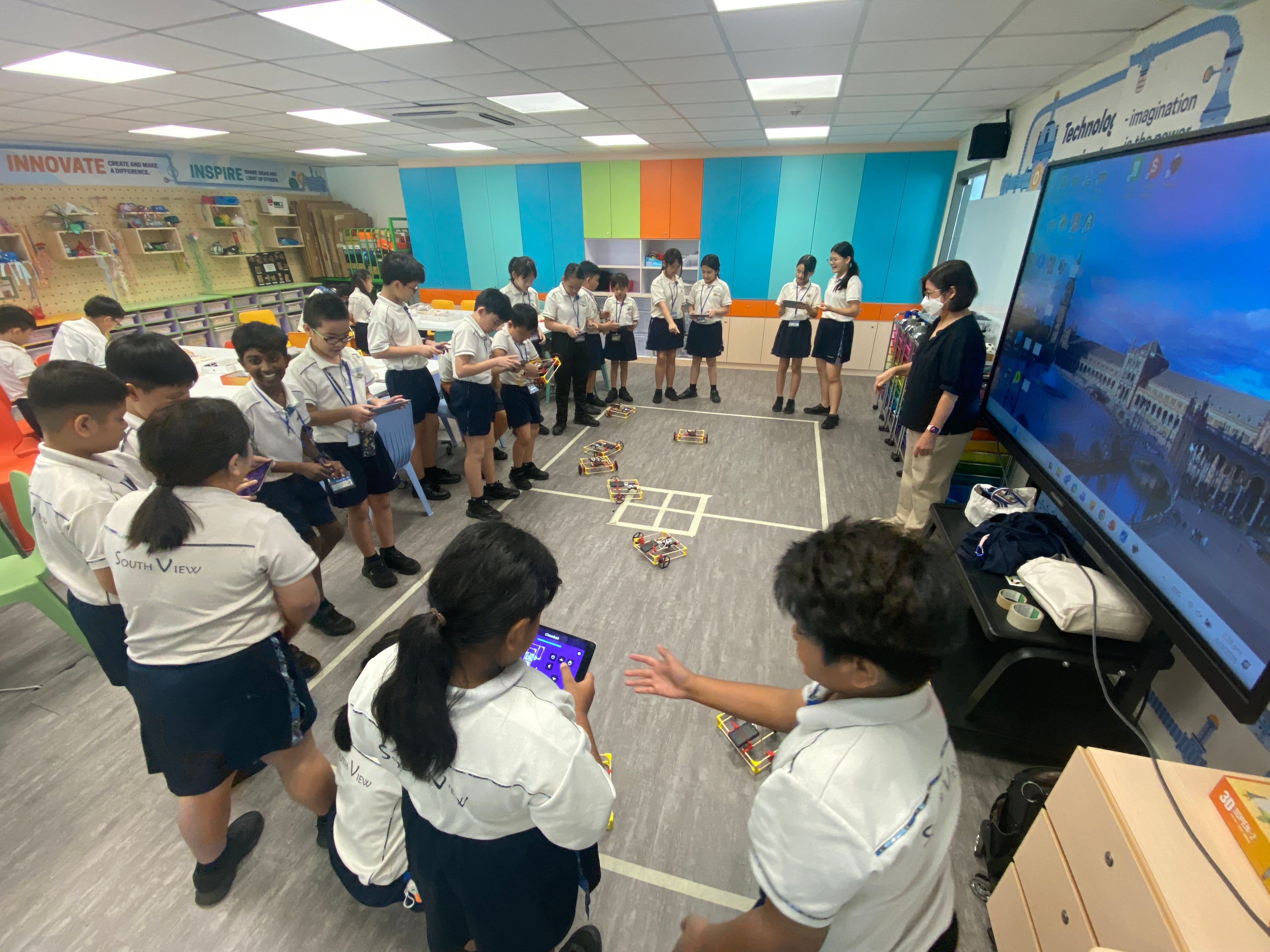
Tink!SV Makers' Friday:
Students build stick 'em robots for a soccer challenge, combining hands-on making with playful competition in a safe, creative environment.
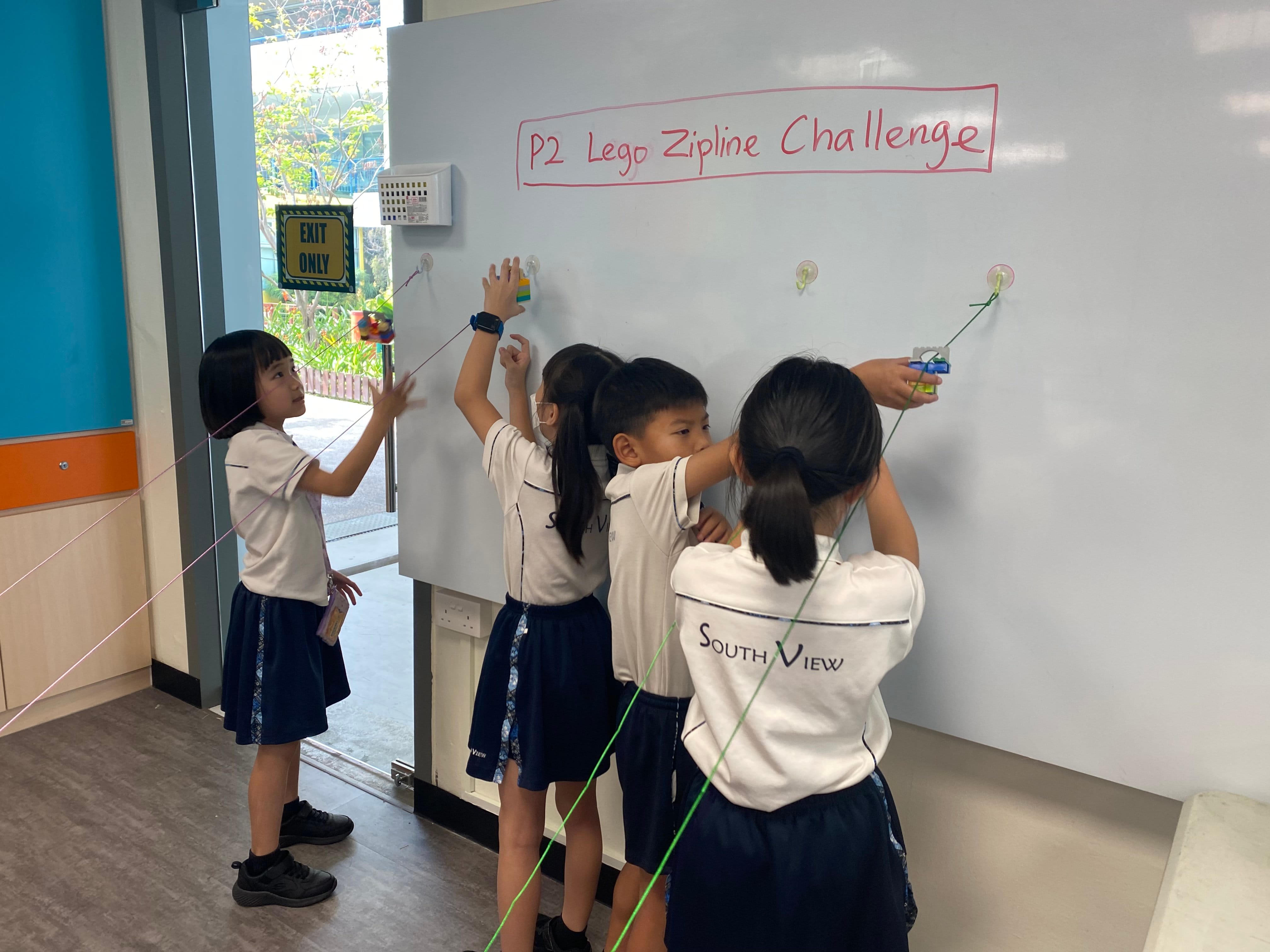
Tink!SV Maker Recess:
Students take on the Lego Zipline Challenge, designing and building a Lego structure to race each other to the finishing line — developing problem-solving skills through self-directed, hands-on exploration.
Tink!SV Maker Buddy Programme:
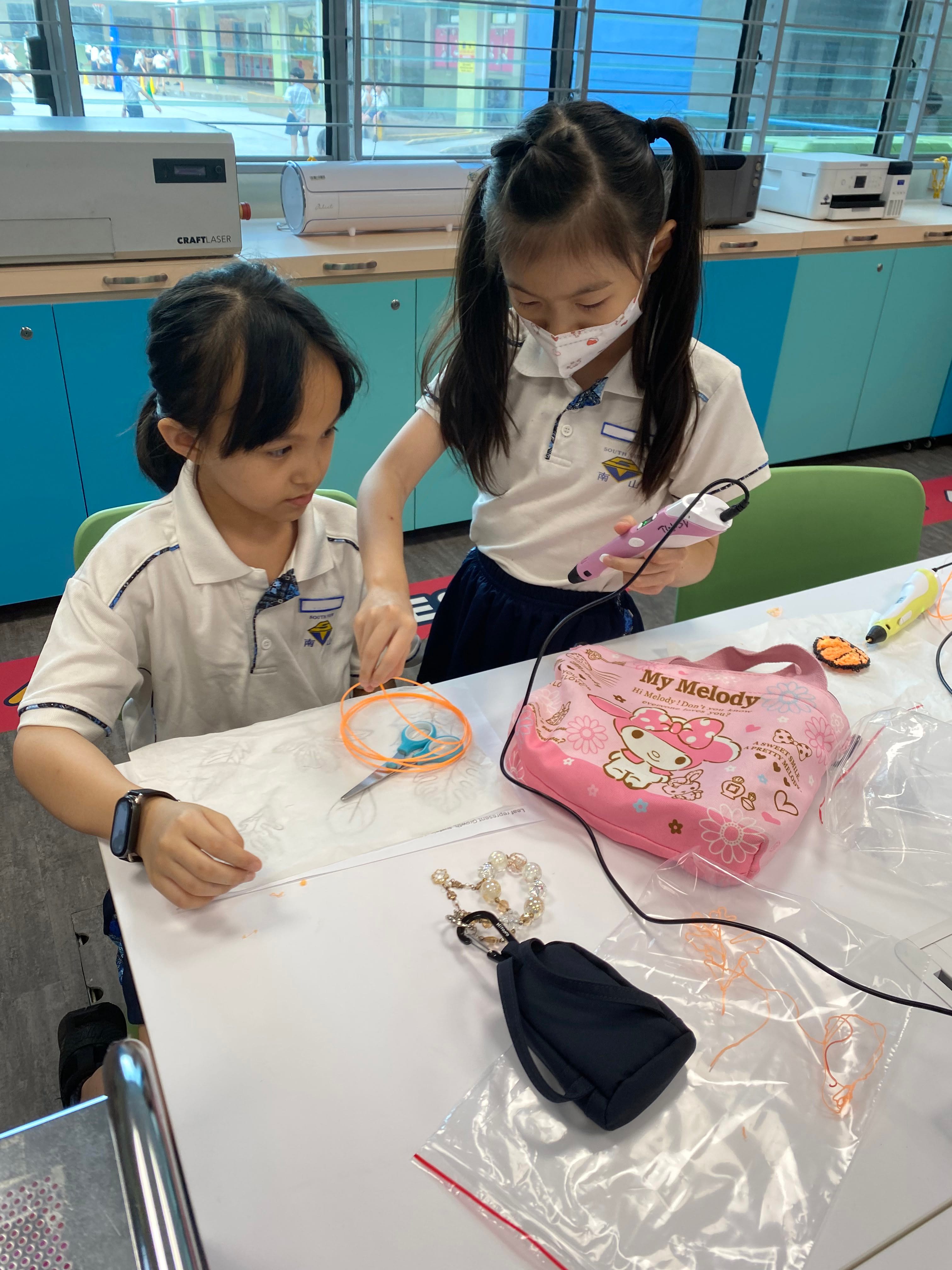
A Maker Buddy guides peers on how to use the 3D pen safely during Maker Recess, modelling responsible making and demonstrating peer leadership in action.
Recycling Zone:
Students practise responsible recycling by sorting recyclables — paper, plastics, and metal — into the correct bins, building sustainable habits and a sense of environmental stewardship. These recycled materials are then given new life in the Tinkering Zone, where students transform them into creative maker projects.
DESIRED STUDENT OUTCOMES
Through these programmes, the school aims to achieve the following student outcomes:
Develop adaptive and inventive thinking through open-ended challenges, iterative design, and building resilience by learning from mistakes
Strengthen communication skills by expressing ideas confidently using digital tools, drawings, models, and verbal presentations
Foster collaboration by working respectfully in teams, taking on varied roles, and co-creating solutions through collective decision-making
Nurture self-directed learning by encouraging students to discover their passion for making — and in doing so, extend that passion beyond themselves to serve and inspire others
Adaptive and Inventive Thinking:
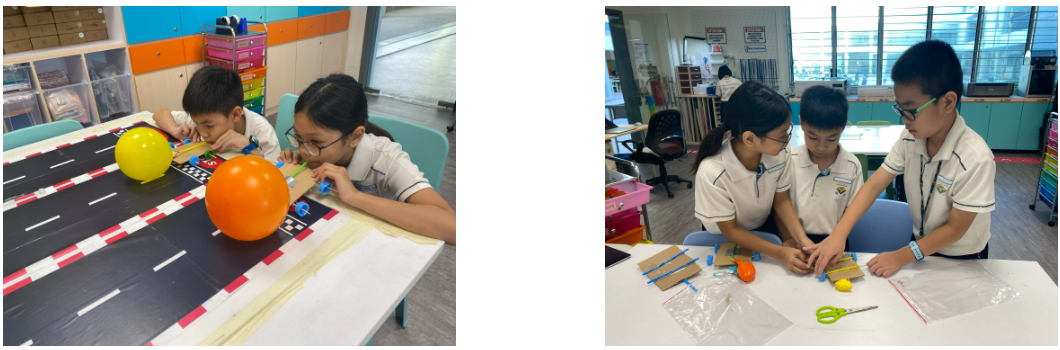
Students test their balloon cars while a Maker Buddy works alongside them to refine their prototypes — applying iterative design thinking to problem-solve in action, and extending their passion for making to serve and inspire others.
Communication:
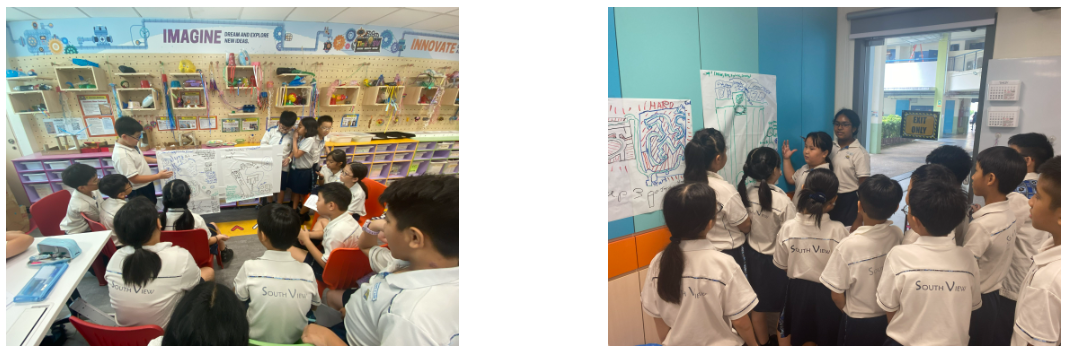
Students present their design ideas to peers, practising the ability to articulate their thinking clearly and receive constructive feedback in a collaborative learning environment.
Collaboration:
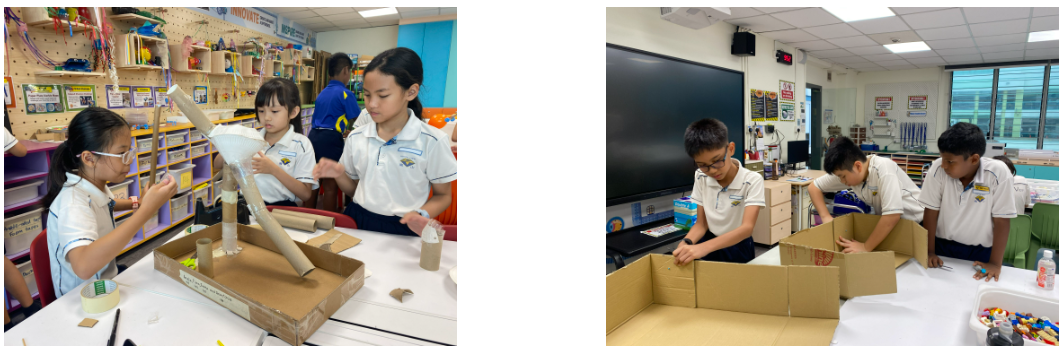
Students work together to build a paper roller coaster and a maze runner, taking on shared responsibilities, negotiating ideas, and co-creating solutions to achieve a common goal.